
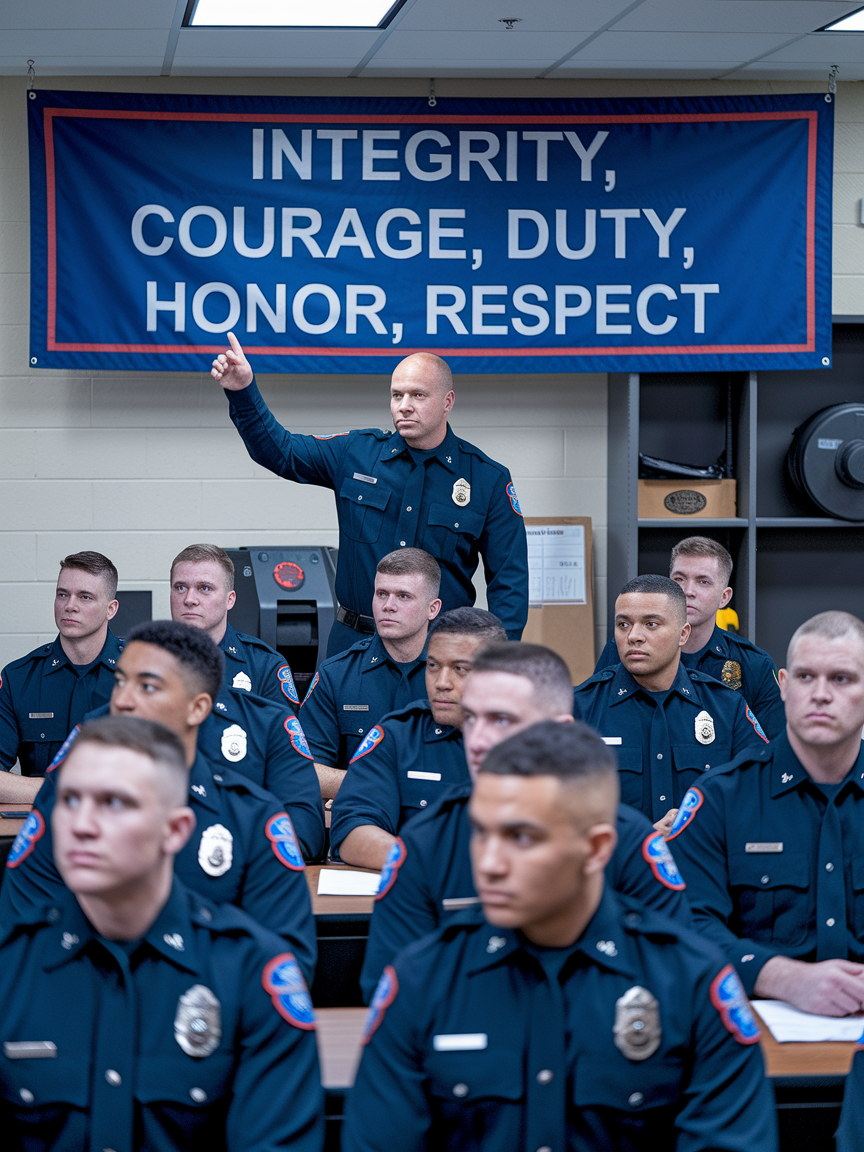
When a new recruit steps into their first Firefighter 1 class, they carry more than gear and textbooks. They bring hopes, fears, and an incipient sense of purpose. The fire service, however, is not just a vocation—it’s a calling rooted in emotionally intelligent values that transcend technical competence. The question instructors and educators must ask isn’t merely,
“Can you advance a hoseline?” but rather, “Why are you here, and who do you aspire to become?”
Values-based training isn’t an optional add-on. It forms the foundation of creating firefighters who embody the ethos of service. They also embody integrity and compassion. This article explores how fire service educators can prioritize values alongside skills. This ensures graduates emerge as well-rounded professionals. They will be prepared to uphold the sacred trust of their communities.
Perspective
The First Day: Intentions Shape Outcomes
The initial moments of training set the tone for a recruit’s journey. Instead of diving straight into drills, values-centered instructors begin by asking foundational questions:
- “What is your intent in joining the fire service?”
- “What values do you believe define a firefighter?”
- “How do you envision serving your community beyond emergencies?”
These questions force recruits to reflect on their motivations. A candidate might answer, “To save lives,” but digging deeper reveals whether they grasp the humility, patience, and selflessness required. The goal is to align their personal aspirations with the fire service’s core mission: protecting lives, property, and the well-being of both the public and their team. By establishing intent early, instructors frame the entire curriculum as a path to values-based character development in emotionally intelligent students, not just skill acquisition.
Core Values: The Heart of Fire Service Professionalism

Paul Combs Art
Firefighting demands technical mastery—ventilation, search-and-rescue, incident command—but without values, these skills ring hollow. You might want to even consider having every class create their own core values. The fire service thrives on shared principles that define its culture:
- Integrity: Firefighters must act ethically, even when no one is watching. This means refusing shortcuts during training, admitting mistakes, and prioritizing transparency.
- Respect: Treating coworkers, victims, and even critics with dignity fosters trust. A firefighter who mocks a panicked homeowner or those less fortunate, undermines the service’s reputation.
- Compassion: Emergencies are traumatic. Balancing efficiency with empathy—such as comforting a family after a kitchen fire—builds community bonds.
- Teamwork: The “buddy system” isn’t just tactical; it’s a mindset. Egos dissolve when lives depend on collaboration.
- Courage: Moral courage is as vital as physical bravery. Reporting unsafe practices or confronting those who spread disruptive rumors within ranks requires fortitude.
These values aren’t abstract—they dictate actions. For example, a recruit proficient in ladder raises but dismissive of slower peers risks team cohesion. Conversely, a firefighter who prioritizes respect elevates the entire crew.
Instructors as Mentors: Modeling Values in Action
Values are embedded, not just educated to. Instructors must ask themselves: “Am I creating thinkers or robots? Professionals or technicians?” Training that prioritizes speed over reflection risks producing graduates who see emergencies as puzzles to solve, not people to serve.
Effective mentors lead by example:
- Demonstrate humility: Admit when you don’t know an answer, showing that growth never stops.
- Highlight “essential skills, (Emotional Intelligence & Character)”: Praise recruits who comfort a role-playing victim during drills, not just those who finish fastest.
- Address misconduct immediately: If a recruit belittles a teammate, use it as a teachable moment about respect.
Imagine , just like Homeboy Industries has someone read their mission statement everyday, a fire academy in New Jersey begins each day with a “value spotlight,” where instructors share stories of firefighters who demonstrated qualities like integrity, courage, or compassion. These narratives could help make abstract values more tangible and relatable for recruits, inspiring them to embody these principles in their own careers.
Teaching the Balance: Integrating Values into Skill Development

Values-based training isn’t theoretical—it’s woven into every drill. Consider these approaches:
- Scenario-Based Learning: Simulate a structure fire where recruits must triage victims while a distraught family argues nearby. Debrief afterward: “How did you balance firefighting responsibilities with empathy?”
- Reflection Exercises: After a high-pressure evolution, ask recruits to journal about ethical dilemmas they faced.
- Peer Assessments: Encourage recruits to objectively and in a supportive manner, evaluate teammates not just on skill execution, but on communication and support.
For instance, during a ventilation drill, an instructor might pause to ask, “How would you explain your actions to a homeowner worried about property damage?” This ties technical choices to community trust.
Measuring Success: Beyond the Checklist
Graduation shouldn’t hinge solely on passing a skills test. Evaluate recruits holistically:
- Do they advocate for safety, even if it means slowing down?
- Do they treat the office staff with the same respect as chiefs?
- Can they de-escalate a conflict during a medical call?
The true test comes years later, when a firefighter faces a split-second decision that pits efficiency against ethics. Values-based training ensures their instincts align with the service’s highest ideals.
Conclusion: A Call to Action for the Fire Service
The fireground reveals character. Technical skills save lives, but values sustain the profession’s legacy and continually raise the bar for performance. As instructors, we must ask ourselves daily: “Are we molding firefighters who honor the badge?” This requires courage to prioritize culture change—rewarding empathy, addressing toxic behaviors, and fostering mentorship.
When recruits graduate, they should carry more than certifications. They should embody the oath they swore: to serve with honor, respect, compassion and unwavering integrity. To fully appreciate the heavy weight they wear to serve the public who calls at their darkest hour. The future of the fire service depends not on how well we teach knots, but on how deeply we instill values that define us as the most trusted and respected service in America.
Bibliography
- Correia, A. (n.d.). Mentoring Resources. Anthony Correia Blog. Retrieved from https://acorr1954.com/mentoring-resources/
- Correia, A. (2017, October 9). Integrating Mentoring with the Formal Educational Process. Anthony Correia Blog. Reprinted from ISFSI’s The Buzz Newsletter. Retrieved from https://acorr1954.com/2017/10/09/integrating-mentoring-with-the-formal-educational-process-reprint-from-isfsis-the-buzz-newsletter/
- Correia, A. (2021, January). Character, Attitudes, and Values: Defining the “Good” Firefighter. Fire Engineering. Retrieved from https://www.fireengineering.com/firefighter-training/character-attitudes-and-values-defining-the-good-firefighter/
- Boyle, G. (2017). Barking at the Choir: The Power of Radical Kinship. Simon & Schuster.
- Goleman, D. (1995). Emotional Intelligence: Why It Can Matter More Than IQ. Bantam Books.
- National Fire Protection Association (NFPA). (2022). NFPA 1001: Standard for Firefighter Professional Qualifications.
- U.S. Fire Administration (USFA). (2019). Leadership in Crisis: Best Practices for Fire Service Leaders.
- Brunacini, A. (2002). Fire Command: The Essentials of Local IMS. National Fire Protection Association.
- Coleman, R. J. (2018). The Volunteer Firefighter: A Culture of Courage and Community. PennWell Books.
- Sendelbach, T. (Ed.). (2017). Principled Leadership for the Fire Service. Fire Engineering Books.
 TonyECorreia